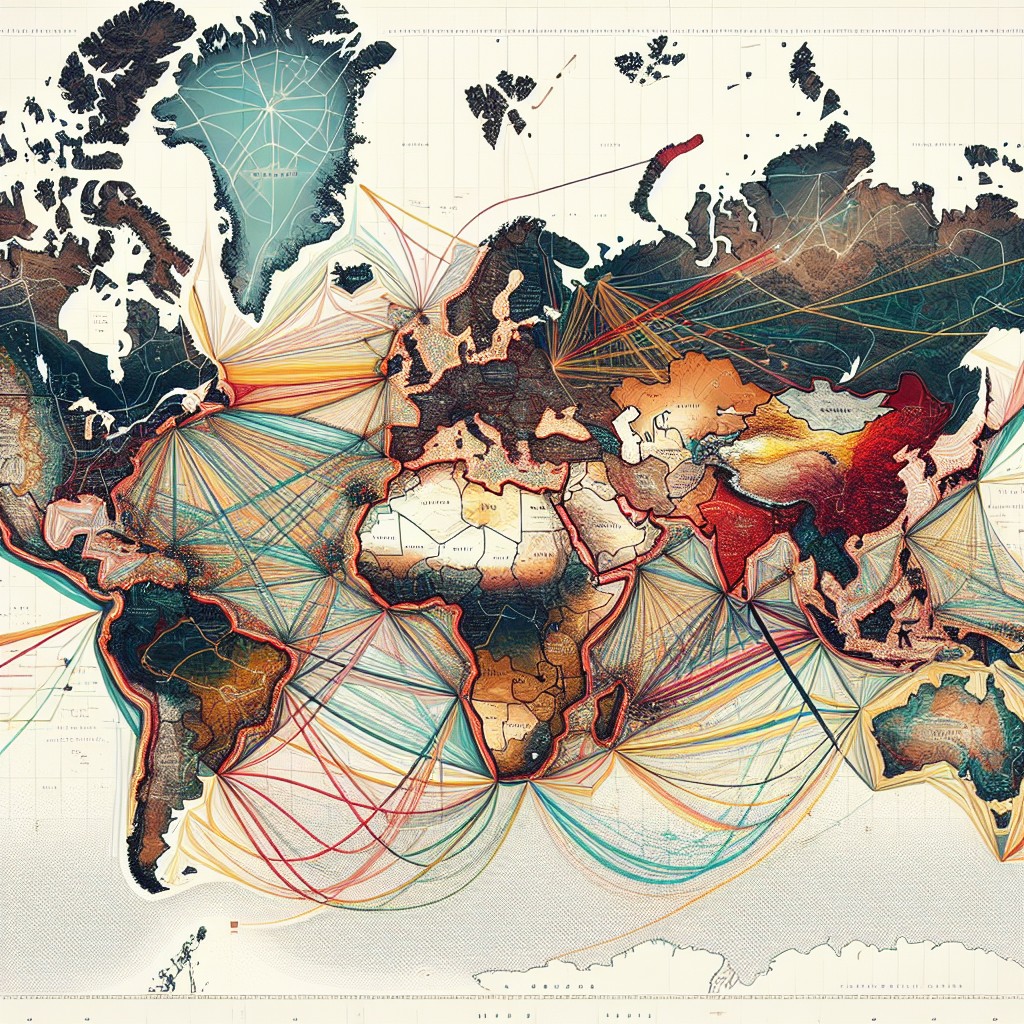
Global trade operates within a complex web of political, economic, and security dynamics, where shifting geopolitical risk factors increasingly influence the paths that goods and services travel. Recent developments in international relations have prompted companies and governments alike to adapt their logistics strategies, highlighting the importance of understanding how geopolitical risks can reshape trade routes.
Understanding Geopolitical Risk and Its Impact on Trade
Geopolitical risk refers to the uncertainty and potential for loss arising from political instability, conflict, or governmental actions in regions critical to international commerce. This risk can destabilize supply chains, disrupt transportation corridors, or impose new regulatory hurdles. As global trade depends heavily on predictable and secure routes, even minor geopolitical fluctuations can trigger significant rerouting decisions to avoid vulnerable regions.
Strategic Shifts in Maritime Trade Routes
Maritime trade, responsible for the majority of global cargo shipment, often bears the brunt of geopolitical risks. Recent escalations in tensions near the Strait of Hormuz and the South China Sea have forced shipping companies to reconsider traditionally favored routes. Many are opting for longer but safer alternatives to circumvent hotspots, despite increased fuel costs and transit times. These adjustments illustrate how geopolitical risk prompts tangible shifts in global logistics patterns.
The Role of Geopolitical Risk Maps in Decision Making
Governments and multinational corporations increasingly rely on geopolitical risk maps to visualize areas of concern and assess the stability of trade corridors. These maps assimilate data on political tensions, border disputes, economic sanctions, and military presence to offer an updated risk landscape. By integrating such information, stakeholders can proactively redesign supply chains, avoiding potential disruptions and mitigating financial exposure.
Case Study: Trade Route Adaptations in Eurasia
The Eurasian landmass has witnessed considerable rerouting activity in response to evolving geopolitical risks. For instance, increased instability along traditional passageways like the Black Sea and certain Central Asian borders has led to a rise in the use of alternative corridors such as the Northern Sea Route. This Arctic passage, previously limited by environmental challenges, is gaining attention as melting ice opens new possibilities, presenting a different geopolitical context with its own set of risks.
Technological Advances Enhancing Risk Monitoring
Emerging technologies contribute significantly to managing and anticipating geopolitical risks affecting trade. Satellite monitoring, artificial intelligence, and real-time data analytics have improved the precision of risk maps. These tools enable rapid identification of developing crises, allowing logistics planners to adjust routes promptly. This technological integration underscores how geopolitical risk assessment continues to evolve, supporting more resilient global trade networks.
Conclusion: Navigating the Future of Trade Amid Geopolitical Uncertainties
As geopolitical risk remains an inherent aspect of global commerce, the ongoing rerouting of trade routes reflects adaptive strategies to maintain continuity and security. Stakeholders must continuously analyze these changing risk landscapes and invest in technologies that provide timely, accurate insights. Given the current trends, the dynamic interplay between geopolitical factors and trade will likely lead to further diversification of routes, reinforcing the importance of flexible and informed supply chain management.
Frequently Asked Questions about geopolitical risk
What is geopolitical risk and why does it matter for global trade?
Geopolitical risk entails political instability or conflict that can disrupt international trade by affecting the safety and reliability of trade routes. Understanding it is crucial for anticipating and mitigating supply chain interruptions.
How do geopolitical risk maps help businesses?
These maps provide visual and data-driven insights into regions experiencing instability or conflict, allowing businesses to plan and adapt their logistics to avoid high-risk areas effectively.
Can geopolitical risk cause permanent changes to trade routes?
While some changes are temporary responses to immediate threats, sustained geopolitical risk in certain regions can lead to lasting alterations in the choice of trade corridors for safety and cost reasons.
What role does technology play in managing geopolitical risk?
Technological tools like satellite imagery and AI enhance the monitoring of geopolitical risk, enabling faster and more accurate route adjustments to ensure supply chain resilience.
Are geopolitical risks evenly distributed across all trade routes?
No, geopolitical risk varies by region and route depending on factors such as political stability, regional conflicts, and economic sanctions, influencing the degree of risk for each trade pathway.